
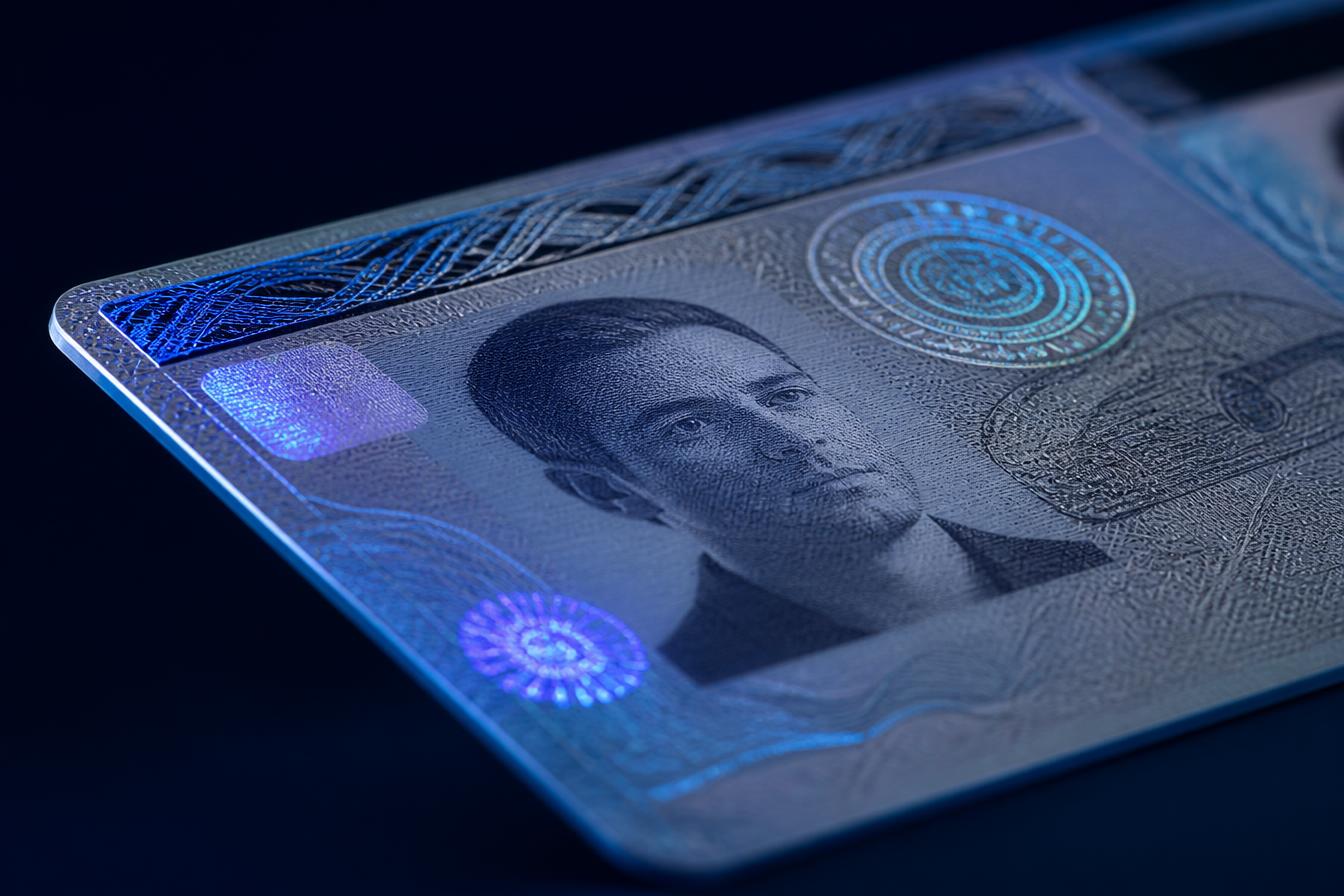
Secure driving licence
A credential that cannot be quietly copied.
Our polycarbonate driving licence card combines optical, chemical and mechanical security so that verification is instant in the field and conclusive in the laboratory.
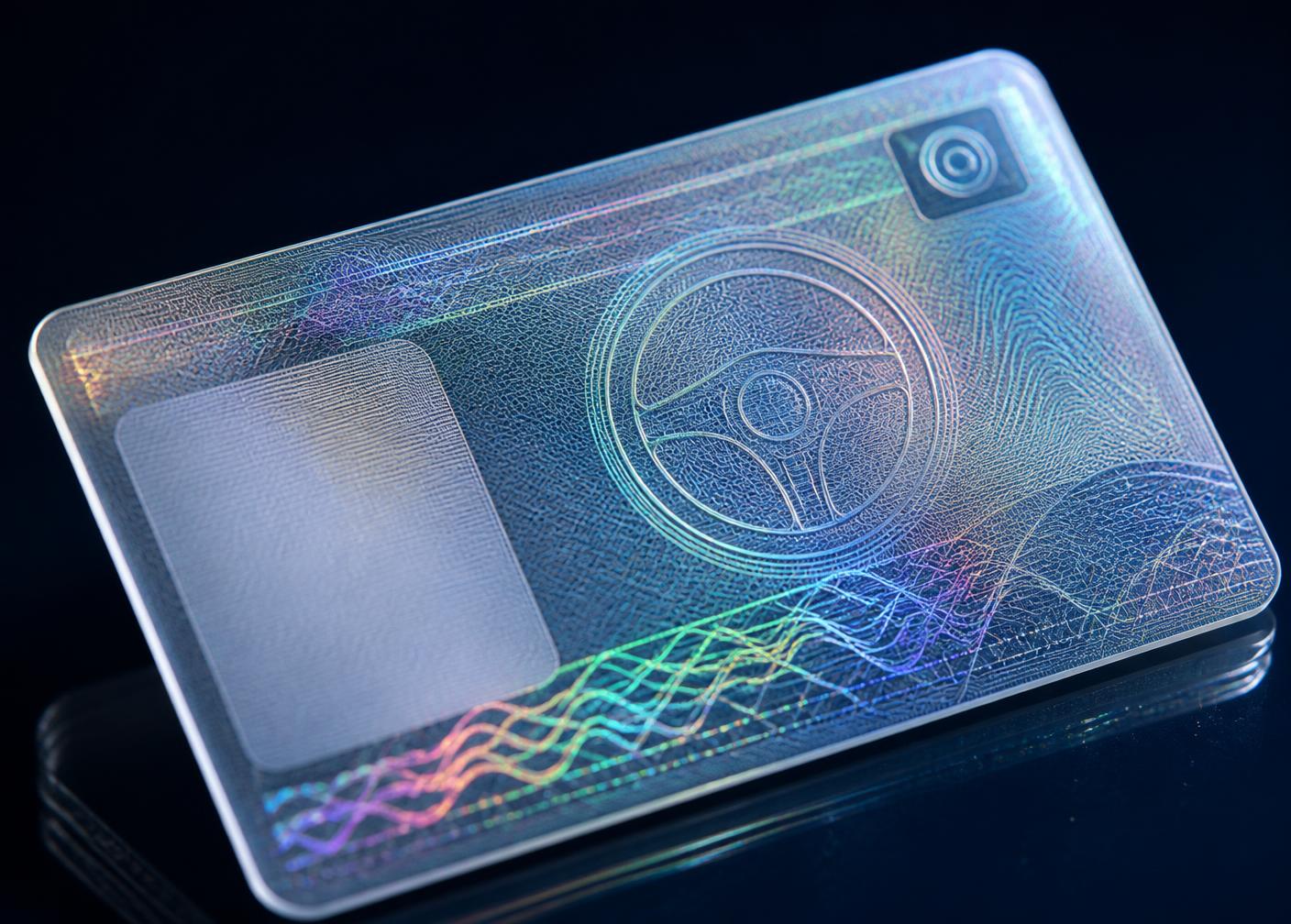
Card specification
Built layer by layer
Each feature is chosen because it defeats a specific attack — surface alteration, photo substitution, reproduction or wholesale counterfeiting.
- Polycarbonate card body
- Holographic security overlay
- Micro-text printing
- UV fluorescent ink
- Laser engraving
- Overt, covert and forensic architecture
Security in the detail
Every layer answers a different attack
Holographic overlays defeat casual reproduction. Micro-text and UV fluorescent ink defeat desktop forgery. Laser-engraved personalisation survives abrasion and chemical tampering.
Together these features create a document that is quick to authenticate in the field and slow to reverse-engineer in a workshop.
Security architecture
Three levels, one document
Level 1 — Overt
Verified by any officer or citizen in seconds: holograms, colour shift and tactile engraved relief.
Level 2 — Covert
Revealed under UV illumination or magnification: fluorescent patterns and micro-text lines.
Level 3 — Forensic
Markers known only to the issuing authority, confirmed under laboratory examination.
How we work
An eight-stage controlled production chain
- 01
Design & approval
Artwork, security feature placement and authority sign-off.
- 02
Pre-print
Colour management, personalisation layout and plate preparation.
- 03
Optical layer
Holographic and diffractive elements applied to the card body.
- 04
Fluorescent layer
UV-reactive inks printed to covert specification.
- 05
Lamination
Polycarbonate layers fused into a single tamper-evident body.
- 06
Laser engraving
Personal data engraved inside the card, not onto its surface.
- 07
Quality control
Feature-by-feature verification against the approved standard.
- 08
Secure delivery
Controlled custody, reconciliation and audited handover.